In football administration, appointments are often scrutinised not because of who is appointed, but because of the process that led to those appointments.
That is precisely why Safa Cape Town’s recent decision to appoint Terence Hermanus and Clive Bailey to its Legal and Constitutional Affairs Committee warrants closer examination.
On the surface, the appointments appear straightforward. Look deeper, however, and they raise a series of questions that have yet to be adequately answered.
Hermanus was among the few administrators willing to publicly challenge the status quo during last year’s regional elections, particularly regarding the inclusion and eligibility of Eric Gum as a presidential candidate. Unlike many administrators that is content to toe the line, Hermanus has built a reputation for speaking his mind, regardless of whose feathers it may ruffle.
Meanwhile, Clive Bailey’s situation is equally noteworthy. The Mitchell’s Plain LFA secretary has himself been the subject of controversy after being suspended by the region over alleged registration irregularities.
Against that backdrop, their inclusion on one of the region’s most important committees inevitably attracts interest. But perhaps the focus has been misplaced.
The real issue is not whether Hermanus and Clive Bailey are qualified to serve. The real issue is why the committee suddenly required additional members in the first place. Was the existing Legal and Constitutional Affairs Committee deemed ineffective?
If so, where is the evidence? Was a formal performance review conducted? Who conducted that review and what criteria were used to assess the committee’s performance? Were reports submitted by the current committee members as required by the region’s governance structures?
If reports were not submitted, what action was taken? And if they were submitted, what deficiencies justified expanding the committee? These are not insignificant questions. They speak directly to issues of governance, accountability and transparency within the region.
Interestingly, similar concerns were raised by former Safa Cape Town treasurer Sadick Williams in his resignation letter. Among other issues, Williams questioned what he perceived to be a selective approach to oversight, where certain portfolios appeared to be subjected to greater scrutiny than others.
If the region conducted a review and identified shortcomings, then the rationale for expanding the committee should be easy to explain. If no such review took place, however, the football public are entitled to ask what informed the decision.
Transparency should never be viewed as opposition. Nor should legitimate questions be mistaken for political manoeuvring. The appointments themselves may well be justified but the unanswered questions surrounding them are another matter entirely.
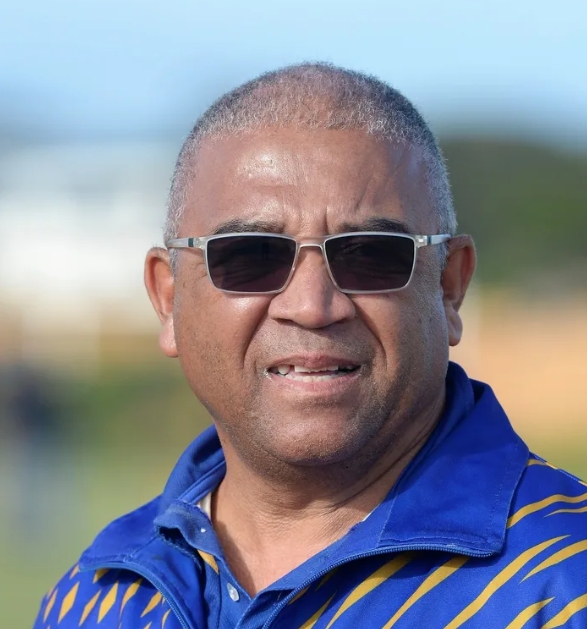
PHOTO SUPPLIED