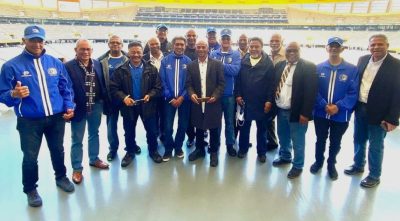

The controversy surrounding the return of the long-standing bookkeeper Les Mondo to Safa Cape Town continues to gather momentum, raising uncomfortable questions about governance, transparency and accountability within local football structures.
At the centre of the debate is an apparent contradiction that some football stakeholders say is becoming increasingly difficult to ignore.
For years, Safa CT’s leadership under the leadership of Bennett Bailey has publicly championed the principles of good governance, transparency and accountability.
Yet critics are now questioning why an accountant whose past conduct has drawn scrutiny was considered for a return to a position involving financial oversight.
No Bones with Jones reported in May that Mondo was relieved from his duties, and this was confirmed by the veteran bookkeeper.
“I’m no longer doing the books of Safa CT, and I think it’s best if you check with the powers that be,” was Mondo’s response to our website.
The development has reignited wider concerns about the state of governance within football administration, particularly against the backdrop of the region’s long-standing audit challenges.
have pointed to the association’s inability to achieve a clean audit over an extended period, arguing that this should place even greater emphasis on rigorous vetting and accountability when financial custodians are appointed.
The question many are asking is straightforward: if governance and transparency are non-negotiable principles, what factors motivated the push to bring Mondo back into the fold?
Mondo, who served as a Chief Financial Officer of the Parliamentary Committee, was dismissed with immediate effect after he charged with five counts of misconduct related to financial matters. He was found guilty on four of these.
Equally troubling for some football administrators is the continued absence of clarity surrounding the so-called Palestine audit report. If such a report exists and was commissioned using football resources, critics argue that Congress members should be afforded the opportunity to scrutinise its findings.
The lack of public disclosure has fuelled speculation and suspicion, with calls increasing for greater transparency around the report’s contents, conclusions and recommendations.
Another issue that remains unanswered is whether Local Football Associations (LFAs) across the region were fully informed of Mondo’s background before decisions relating to his appointment or involvement were considered.
Were delegates provided with all relevant information? Were governance concerns openly discussed? These are questions that continue to linger.
The controversy also raises a procedural question that may ultimately require further clarification from football authorities: what processes were followed, what due diligence was undertaken and who ultimately supported the move for Mondo’s return?
For now, the debate extends beyond one individual. It touches on broader concerns about transparency, accountability and the credibility of football governance structures at a time when confidence among the football fraternity appears increasingly fragile.
Whether football’s leadership addresses these questions directly or chooses to remain silent may prove decisive in determining how this latest chapter is judged by clubs, delegates and the wider football community.
PHOTO SUPPLIED