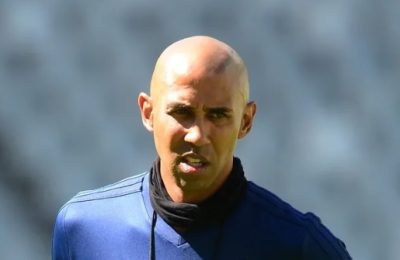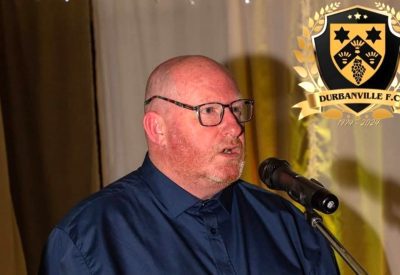
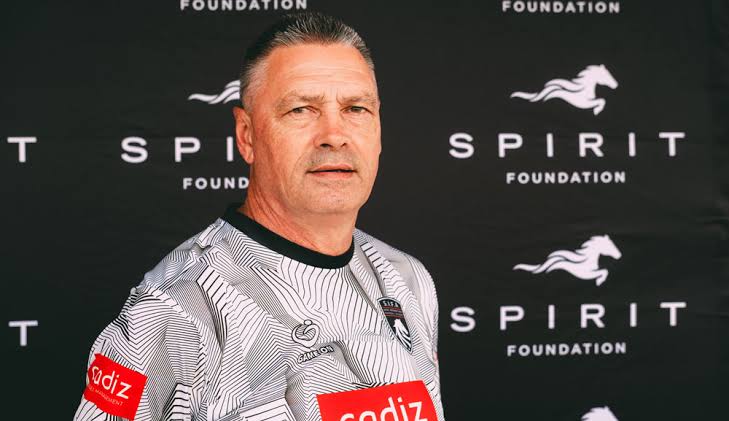
Former Moroka Swallows striker Noel Cousins may have stepped away from the spotlight, but his love for the game remains as strong as ever.
The former Swallows hitman, who formed deadly partnership with the Sea Point Swifts legend Calvin Petersen and Les Grobler in the eighties, was delighted to see the Dube Birds return to the professional ranks.
“I’m very proud to say I was part of that Swallows heritage. Swallows belongs in the PSL because it’s a massive brand with a rich history,” Cousins told No Bones with Jones.
However, he warned that history alone won’t guarantee success.
Said Cousins: “The club must be run properly, like a business, with the right people rebuilding the brand for the long term.”
Cousins, who enjoyed successful playing career, which include honours such as the top goal scorer in 1983, 1987 and 1989, winning the BP Top 8 title in 1985, the 1987 Players’ Player of the Year accolade as well as the Bob Save Super Bowl in 1989 and 1991, also voiced concern over clubs being sold and relocated.
“The sale of clubs like Swallows and Bloemfontein Celtic was sad to see.,” he further explained. “These clubs helped build South African football.”
Despite his concerns about the modern game, that love for football continues to drive his mission to ensure future generations are equipped not only to succeed on the pitch, but in life beyond it.
That philosophy lies at the heart of Spirit International Football Academy’s partnership model with the English Premier League club Everton, which seeks to provide footballers with far more than just an opportunity on the pitch.
“Our main focus is academics combined with football,” Cousins emphasized. “We want to create opportunities for youngsters to further their studies in the United States while continuing to develop as footballers. The goal is for them to leave school, obtain a university degree and have something meaningful to fall back on if football doesn’t work out,” he added.
According to Cousins, too many talented footballers have been failed by a system that focuses solely on the dream of professional football without preparing them for life after the game.
“Too often players are sold the dream of football, but nobody paints the picture of what happens when their careers end,” he pointed out. “Many have been exploited because of their football ability and when it’s all over they don’t have the education, qualifications or support structures to fall back on.”
He believes South African football needs to place greater emphasis on player welfare and long-term financial planning.
“People talk about looking after players, but too often the money disappears and the people who promised to help are nowhere to be found. For me, football has become too focused on greed. We’re forgetting the human element. Human beings play this game, not money,” Cousins concluded.
PHOTO SUPPLIED