Let’s face it, if it wasn’t for Nico McLachlan, Managing Director and his Organisation Development Africa (ODA) company, then Spenston AFC – one of the oldest clubs in the Western Cape – would probably not have been in existence anymore.
This is despite the fact that the Grassy Park-based outfit survived tumultuous times in the past – World War I (1914), World War II (1939 – 1945), the Spanish Influenza Pandemic (1918) and recently the Covid19-pandemic.
Spenston’s legacy was kept alive through the hard work of its loyal and dedicated members – but ultimately it is McLachlan and the ODA’s generosity and support for more than two decades that has been the catalyst and main reason why the club could celebrate its 120 years of existence and excellence this year.
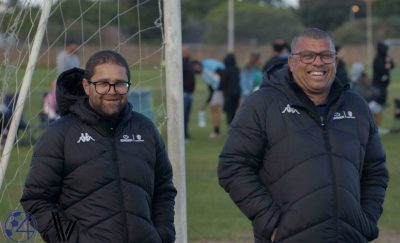
The club’s current chairman Noor Londt – who follows in the footsteps of his predecessors like Shuroot Abrahams, David Vermaak, Gulio Mingo, Shamiel Adams, Dane Steyn, Dorian Lewin – says it’s important to give credit where it’s due.
“I think it is largely because of the friendship that Nico is still with us,” says Londt. “He is the catalyst behind it all and we will forever be grateful to him. Their organisation’s vision and appetite to support amateur clubs is also very admirable,” he added.
Needless to say, ODA’s sponsorship along with other good Samaritans, such as South Peninsula High School’s principal Zeid Baker and his family, has undeniably ensured that thousands of kids were given alternatives and options to nurture them into exemplary human beings.
“Our support for the club and in particular for the junior’s program feeds into wider initiatives aimed at providing meaningful after-school activities,” McLachlan explains. “It has been a privilege to be part of Spenstons’ journey. The club’s management appreciates the social and personal development value of organised sport, especially for those who come from disadvantaged communities. The team at ODA remains committed to supporting Spenston in its future endeavours,” ODA’s MD stated.
The club’s honorary lifelong member Shuroot Abrahams emphasized that the club’s main objective has always been to serve the community to the best of its abilities.
“I don’t think anything has changed,” said Abrahams. “Without membership there would be no club so it is our duty and responsibility to ensure that we do everything possible and work alongside our communities to help grow young minds and work towards a better tomorrow, but we can only succeed by acquiring good partnerships. This resonates with our motto “Development Through Sport.”
Londt revealed that despite the club’s financial challenges, they currently have a contract with a school to use a piece of land for 51 years which they can develop the field and use it as their home base.
“We believe this will be the final step for our club to become self-sustainable and with that, we will be able to create job opportunities by employing groundsmen, security, cleaners, etc. Revenue generated could help fund our feeding projects and we will be able to reach and attract more people. We want to expose our youth and their achievements to whoever is willing to listen, to show them your background does not determine your future”.
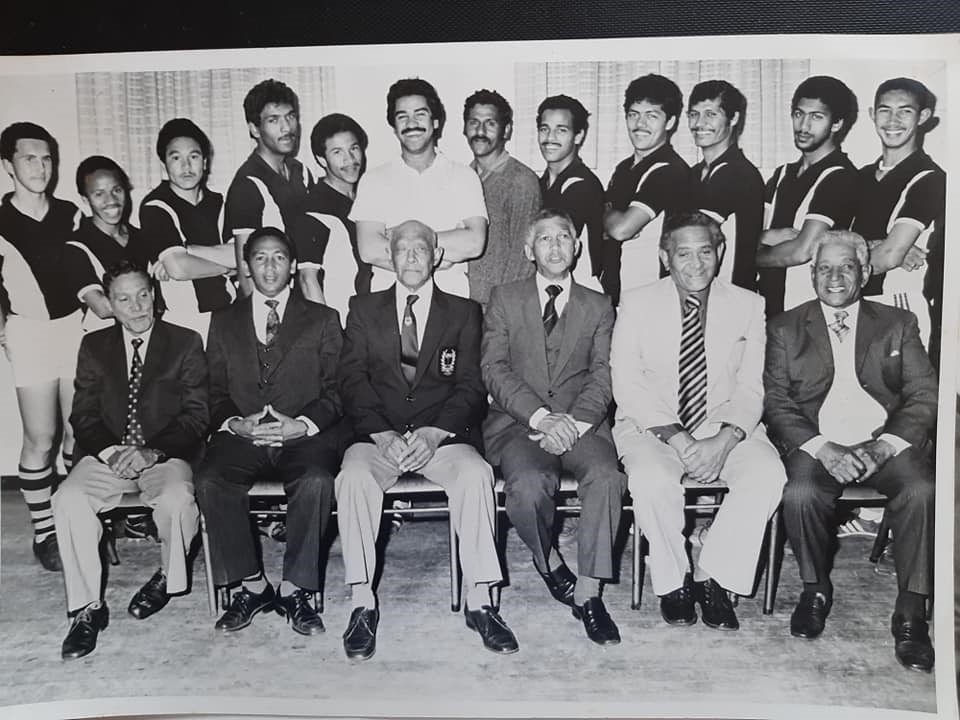
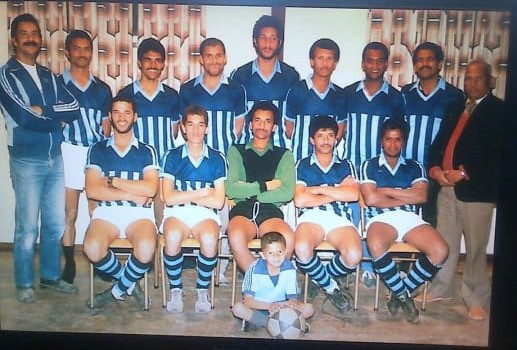
Spenston AFC was established in 1903 – and as with a club well over a century old, tracing its true, factual origin and documenting its rich history was always going to be challenging. This is due to the fact that there are many anecdotes floating around like claims that the club was founded under a tree in Broad Road, Wynberg, while some sources reveal that the club was named after Captain John Spence of the British Royal Navy – hence their nickname the NAVY.
However, others came forward with the notion that the Feder brothers – Tom, Ted, Gerry, Willie and Phil – were the ones behind its formation. The tree on the club’s badge is a tribute to the place where it held meetings during its earlier years.
The club was at its peak during the late 1950’s when players such as Pappie Francis, Leslie van Diemen and Mike Van Schalkwyk were selected for the Western Province team in 1958 – three years later they bagged the prestigious Maggot Cup and repeated this feat in 1969.
Other notable stalwarts include the likes of Lokkie Jacobs, the Cloete’s Ben and Henry, Nicky Parker, Johnny Jansen, Herby Abrahams and the Palmer boys, Ted and George. The history of these legends is something which the current generation are not really familiar with as so much has changed over the years with success not really the main objective but rather to create better human beings.
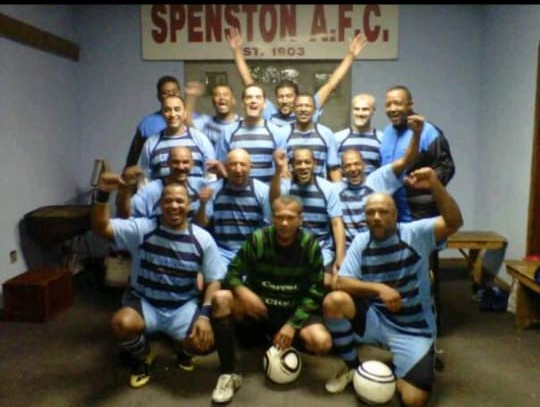
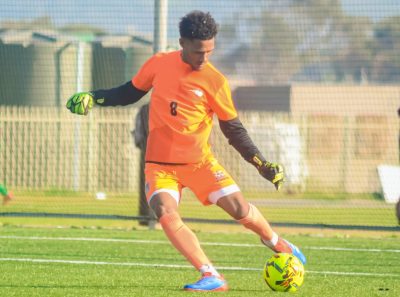
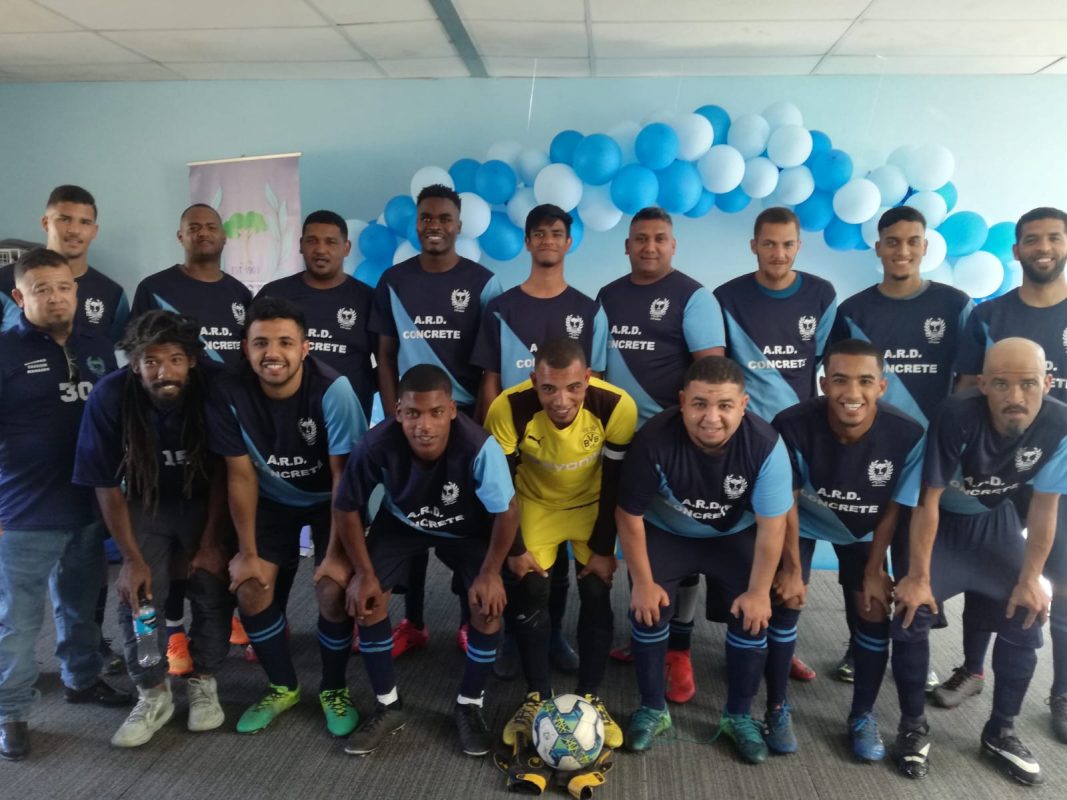
That said the Second Division outfit (pictured) did manage to win the Knockout title last season.
Spenston’s membership these days consists of various age groups from different walks of life as far as Phillipi and Khayelitsha. The youngest playing member is only four years old playing in the under 6-division while the oldest playing member is 61 years old strutting his stuff in the over 40 division.
“We found that its best to recruit them young to instil a sporting and teamwork mindset to help them develop and create positive growth and comradery,” Londt further explained.
“But it is equally important to cater for the older generation as well to help them keep fit and in good health as a form of exercise and stimulation – physically and mentally. Creating a safe place for young and old to live life to the fullest extent, a place where the problems and troubles of the outside world cannot reach.
“To show them that working together can accomplish anything and that there is always a peaceful and productive way to live life. The club provides significant youth development and community upliftment programs as an integrated part of their main pursuit,” Londt further added.
The club will host its annual presentation at the Wynberg swimming pool on Saturday (18 November) to cap off their season for 2023.
“Any donations is welcome to help make it more attractive and memorable for the juniors. We invite everyone who want to join in the fun,” Londt concluded.
A book was written in 2009 by a grade 10 learner for the University of Cape Town’s oral history program, which won an award for the gripping story and history of the club.